

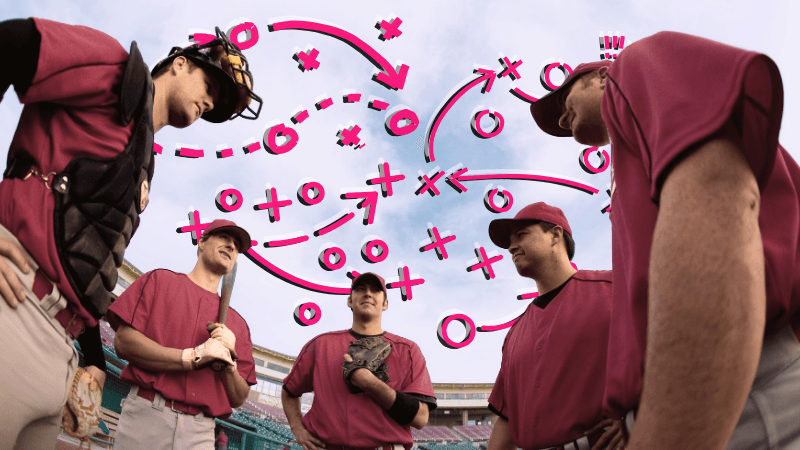
The Stadium Stock Market: Can You Treat Sports Betting as an Investment?

Most people walk into a sportsbook with the same mindset they take to a casino: they are there for the adrenaline, the "sweat," and the hope of a lightning-strike jackpot. To them, the money is already gone the moment the bet is placed.
But there is a small, disciplined group of people who look at an NBA point spread or an NFL total the same way a hedge fund manager looks at an undervalued tech stock. For these professionals, sports betting isn't a game of luck—it's a high-yield, high-variance asset class.
If you want to stop "donating" to the bookmakers and start building a portfolio, you need to understand the mechanics of the Stadium Stock Market.
Betting vs. Investing: The Mental Shift
The primary difference between a gambler and an investor is the timeframe. A gambler cares about winning *this* game, *tonight*. An investor cares about the Yield over 1,000 games.
When you treat betting as an investment, you stop looking for "winners" and start looking for Value. An investment is made when the probability of an outcome is higher than what the market price suggests. This is known as Expected Value (EV). If you consistently place bets with a positive EV, the math dictates that you *must* be profitable over time, regardless of any single game's result.
Understanding Your ROI (Return on Investment)
In the stock market, an annual return of 7% to 10% is considered excellent. In the world of professional sports betting, the numbers look a bit different. Because you can "churn" your capital daily (betting the same $100 multiple times a week), a small edge compounds rapidly.
A professional bettor often aims for an ROI of 2% to 5% per bet. While that sounds small, consider the frequency. To see how your own performance stacks up, you should be auditing your ROI (Return on Investment) using this formula:
$$ROI = \frac{\text{Net Profit}}{\text{Total Stake}} \times 100$$
If you aren't tracking this number, you aren't investing; you're just keeping track of your "vibes."
Managing the "Drawdown" (Variance)
Every investment has risk. In stocks, it’s a market crash. In betting, it’s a "cold streak." Even a strategy with a 5% edge can experience 10 consecutive losses—this is the mathematical reality of Variance.
Professional "investors" prepare for this by using a Variance Simulator. This tool helps you visualize the potential "drawdown" of your bankroll. If you know that a 15-unit loss is statistically possible (even likely) over a season, you won't panic and change your strategy when it happens. You’ll have the "diamond hands" required to stay the course.
Diversification Across Markets
Just as an investor wouldn't put their entire life savings into a single stock, a professional bettor diversifies. They look for edges across different sports and leagues. They might find value in NCAA basketball totals during the week and pivot to player props on the weekend.
The goal is to find "uncorrelated" opportunities. By spreading your risk across multiple independent events, you smooth out your growth curve and reduce the impact of a single "bad bounce" ruining your month.
The Tools of the Trade
You wouldn't trade stocks without a terminal and real-time data. Why would you bet on sports without the same level of technical support?
To treat this as a business, you need to strip away the "juice" using a No-Vig Calculator and ensure you are getting the best possible price. A difference of just 5 cents on a line (e.g., -105 vs -110) is the difference between a professional career and a bankrupt account.
From Hobbyist to Asset Manager
The path to profitability is boring. It involves spreadsheets, calculators, and the discipline to walk away from a "hype" game that offers no value. But for those who can handle the emotional swings and master the math, the rewards are higher than almost any other market in the world.
Stop chasing the "big hit." Start building your edge.
Ready to manage your betting portfolio like a pro? Explore our full suite of investment-grade tools and start tracking your path to profit.